

TB-500 and Thymosin Beta-4: Evidence, Gaps and Risks
TB-500 is often presented as if it were thymosin beta-4. It is not. This review explains what the full protein has shown in early clinical studies, why that evidence does not transfer to the synthetic fragment, and what the risks and rules are.
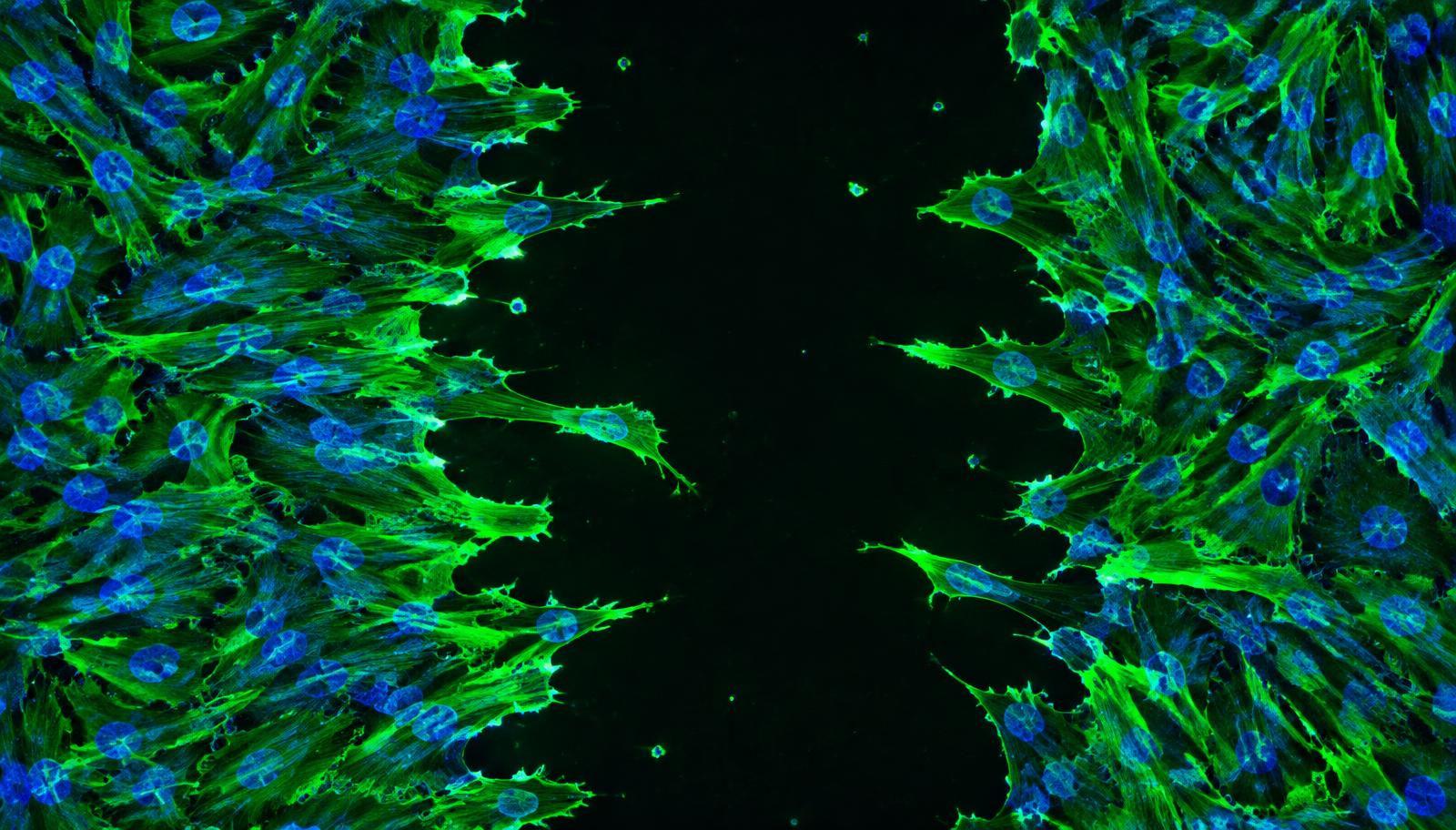
Thymosin beta-4 (Tβ4) is a naturally occurring 43-amino-acid protein present in most human cells. TB-500 is a name used commercially for a synthetic peptide based on a short region of Tβ4, commonly the actin-binding sequence around residues 17 to 23. The two are related, but they are not interchangeable, and that distinction shapes everything that follows.
Mechanism under study
Tβ4 binds monomeric G-actin and regulates the pool available for building filaments, a process central to cell shape and migration. Laboratory and animal studies have linked Tβ4 to cell migration, angiogenesis and modulation of inflammation in models of skin, corneal and cardiac injury. Whether a short synthetic fragment reproduces these effects, and to what extent, is much less studied.
State of the human evidence
Full-length Tβ4 has been evaluated in early clinical studies, notably as an eye-drop formulation for dry eye and neurotrophic keratopathy and in small trials of topical use for chronic wounds. Results were mixed and have not led to an approved medicine. For TB-500 as a synthetic fragment, there are no published controlled human trials establishing efficacy or safety.
Limitations, risks and adverse effects
- Evidence for the full protein cannot simply be attributed to a fragment with a different structure.
- Because Tβ4 promotes cell migration and angiogenesis and is expressed in some tumours, researchers have raised theoretical concerns about cancer progression that have not been resolved.
- Without human safety data, adverse effects of the fragment are not characterised.
- Products sold outside regulated channels may differ in sequence, purity and content from their labels.
Regulatory status by region
Neither TB-500 nor thymosin beta-4 is an approved medicine in the United States, the European Union or the United Kingdom. The World Anti-Doping Agency explicitly lists thymosin beta-4 and its derivatives, such as TB-500, among prohibited substances, and positive tests have been recorded in human and equine sport.
Bottom line
TB-500 sits on a credible biological foundation, but the clinical evidence belongs to a different molecule and remains preliminary even there. Our TB-500 research profile explains the structural differences in more detail.
This article is educational. It is not medical advice, does not recommend any use in humans and does not replace a consultation with a qualified professional. Research-grade materials are not medicines.
Related products
See allFrequently asked questions
Is TB-500 the same as thymosin beta-4?
No. Thymosin beta-4 is a 43-amino-acid protein; TB-500 usually refers to a short synthetic fragment based on part of it.
Is TB-500 banned in sport?
Yes. WADA prohibits thymosin beta-4 and its derivatives, including TB-500, at all times.
Are there human trials of TB-500?
Not controlled trials of the synthetic fragment. Early clinical studies exist only for the full-length protein.
Sources and further reading
About the author
Synedica Research Desk
Scientific content team
The Synedica Research Desk writes and maintains the technical library behind the Synedica Europe catalogue. The team compiles publicly available literature, supplier documentation and analytical data into plain-language explainers for laboratory and research audiences.
- Reviews certificates of analysis supplied with every Synedica batch
- Sources claims from peer-reviewed literature and regulator publications
- Publishes review dates and correction notes on every article
Continue reading
See all
TB-500 and Thymosin Beta-4: Separating the Two
Half the confusion around TB-500 comes from treating it as a synonym for thymosin beta-4. It is not. Here is the actual relationship, and why it changes what you should expect from a datasheet.

BPC-157: What the Literature Actually Describes
Fifteen amino acids, an unusually stable structure and a very large preclinical literature. Here is what BPC-157 is, and what the published work does and does not show.
MOTS-c: Promise and Limits of a Mitochondrial Peptide
MOTS-c — often misspelled online — changed how scientists think about mitochondrial DNA. Animal results are striking, but no controlled human trial has shown a clinical benefit. This review explains why that gap matters.