

Tesamorelin: An Approved GHRH Analogue and Its Evidence
Tesamorelin is one of the clearest examples of a peptide that is a real, approved medicine — but for one condition, in specific markets. This review covers what the trials showed, the safety profile and where the evidence stops.
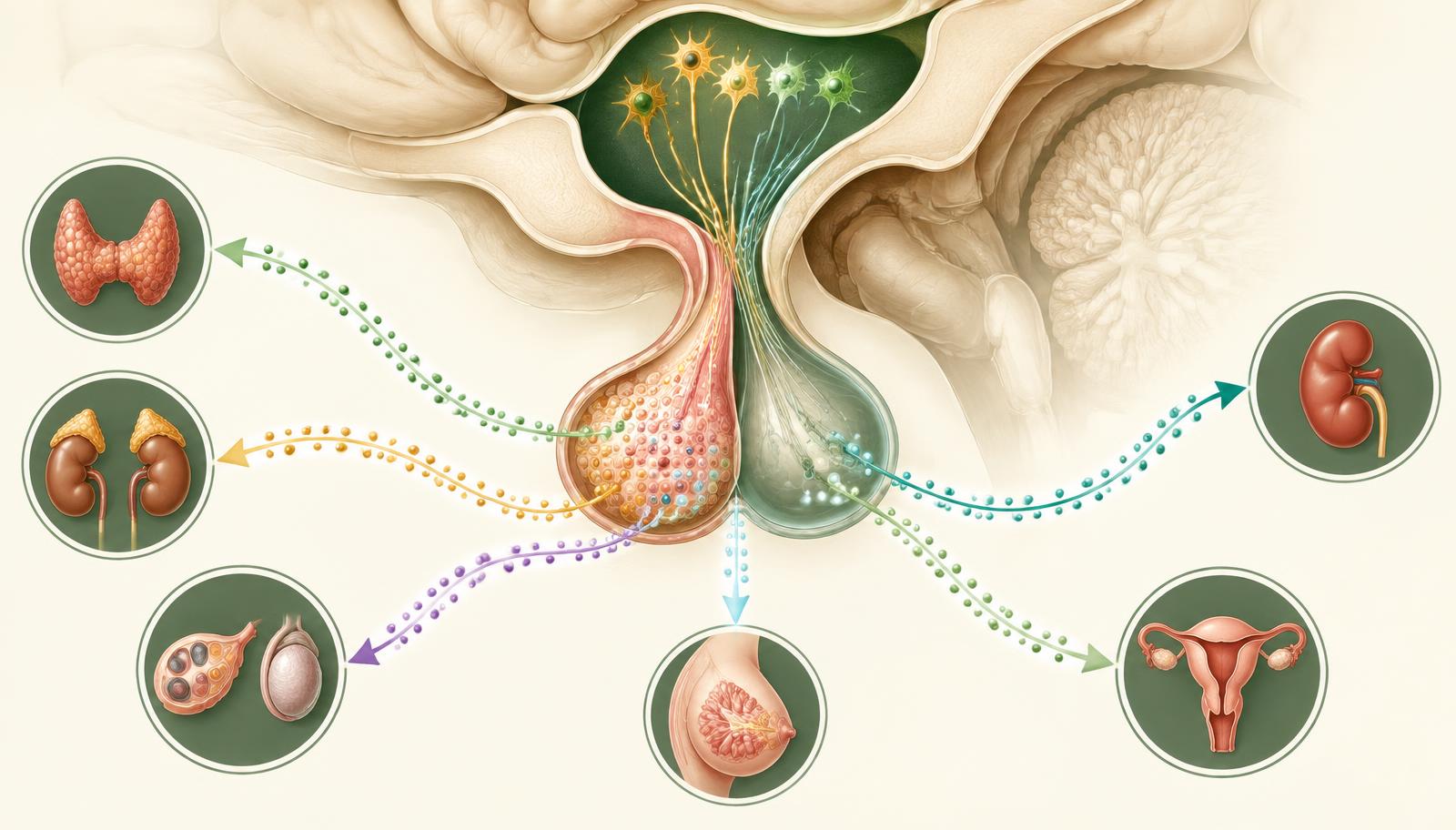
Tesamorelin is a synthetic analogue of growth hormone-releasing hormone (GHRH): the full 44-amino-acid sequence with a trans-3-hexenoyl group added to stabilise it. Unlike most compounds discussed in peptide forums, it has completed phase 3 development and is marketed as a prescription medicine in some countries.
Mechanism under study
Tesamorelin binds GHRH receptors in the anterior pituitary and stimulates pulsatile release of the body's own growth hormone, which in turn raises IGF-1. Because it acts upstream, feedback mechanisms such as somatostatin remain active — a pharmacological difference from administering growth hormone directly.
State of the human evidence
Randomised, placebo-controlled phase 3 trials in people living with HIV and abdominal fat accumulation showed a reduction in visceral adipose tissue of roughly 15 to 18 percent over 26 weeks compared with placebo. The effect largely reversed after stopping treatment. Later studies explored liver fat in people with HIV and non-alcoholic fatty liver disease, with encouraging but still limited results.
There is no robust evidence for use outside these populations, for example for general body composition, ageing or performance.
Risks and adverse effects
- Injection-site reactions, joint pain, muscle pain and peripheral swelling were among the most commonly reported effects.
- Raised IGF-1 and worsened glucose tolerance were observed, so the label calls for monitoring.
- The approved label contraindicates use in pregnancy, active malignancy and disorders of the hypothalamic-pituitary axis.
Limitations of the evidence
Reduction in visceral fat is a surrogate marker; the trials were not designed to show fewer cardiovascular events or longer survival. Long-term data on cancer risk, given the rise in IGF-1, remain limited.
Regulatory status by region
- United States: approved by the FDA in 2010 (brand Egrifta) to reduce excess abdominal fat in adults with HIV and lipodystrophy.
- European Union: an application to the EMA did not result in a marketing authorisation, so it is not an approved medicine in the EU.
- United Kingdom: no MHRA marketing authorisation at the time of writing.
- Growth hormone secretagogues are prohibited by the World Anti-Doping Agency.
Bottom line
Tesamorelin shows what a full regulatory path looks like: defined indication, controlled trials, a monitored safety profile. Research-grade material is not that medicine. For more on the GHRH family, see our tesamorelin research profile.
This article is educational. It is not medical advice, does not recommend any use in humans and does not replace a consultation with a qualified professional. Research-grade materials are not medicines.
Related products
See allFrequently asked questions
Is tesamorelin an approved drug?
Yes, in the United States, for HIV-associated excess abdominal fat. It is not authorised in the EU or the UK.
How is tesamorelin different from growth hormone?
It stimulates the pituitary to release the body's own growth hormone rather than supplying the hormone directly.
Do the benefits persist after stopping?
In trials, the reduction in visceral fat largely reversed after treatment stopped.
Sources and further reading
About the author
Synedica Research Desk
Scientific content team
The Synedica Research Desk writes and maintains the technical library behind the Synedica Europe catalogue. The team compiles publicly available literature, supplier documentation and analytical data into plain-language explainers for laboratory and research audiences.
- Reviews certificates of analysis supplied with every Synedica batch
- Sources claims from peer-reviewed literature and regulator publications
- Publishes review dates and correction notes on every article
Continue reading
See all
Tesamorelin: A Growth Hormone Releasing Factor Analogue
Tesamorelin is one of the few peptides in this list that has been through full clinical development. That history makes it a useful reference point for everything else.

PT-141 (Bremelanotide): What the Evidence Really Shows
Bremelanotide is one of the few melanocortin peptides that completed phase 3 trials and reached approval — but only in one country, for one narrow indication. Here is what the trials found, what they did not, and why research material is not the medicine.

NAD+: Not a Peptide — What the Coenzyme Evidence Shows
NAD+ is often sold next to peptides, but chemically it is a dinucleotide coenzyme. This review explains its biology, what human trials of precursors have and have not shown, and why claims about anti-ageing benefits run ahead of the data.