

Signal, Carrier and Modulating Peptides: A Vocabulary for Cosmetic Formulation
Signal, carrier and modulating peptides offer a useful vocabulary for discussing cosmetic ingredients. These labels describe proposed roles, not guaranteed results. Understanding their boundaries helps formulators and informed readers connect molecular identity, experimental observations and finished-product evidence without confusing a plausible mechanism with a demonstrated cosmetic benefit.
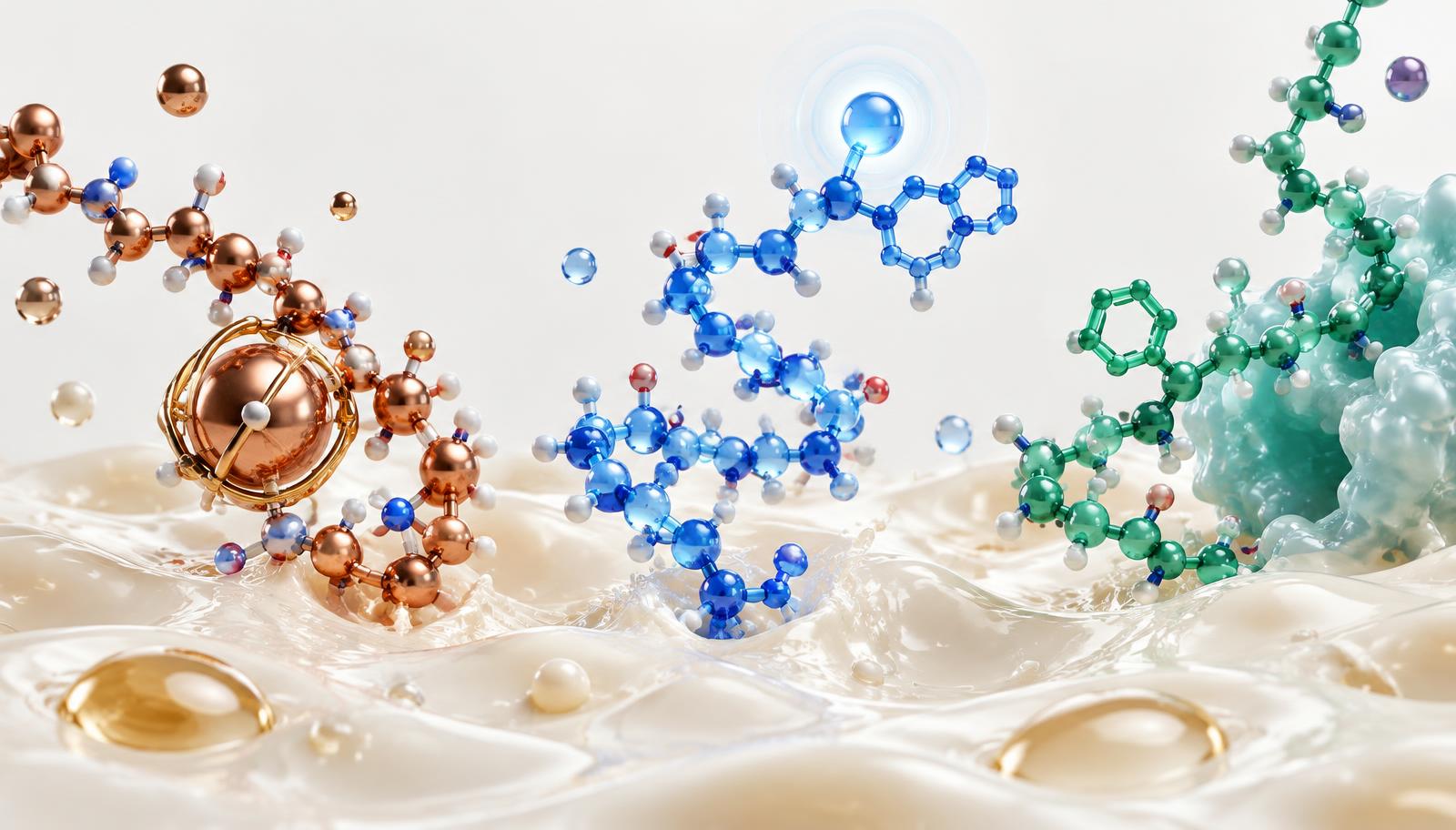
A functional map, not a performance ranking
Peptides are molecules built from amino acids linked by peptide bonds. In cosmetic discussion, they are often grouped according to the role they are intended or proposed to play. A functional taxonomy answers a practical question: what is this ingredient being investigated or selected to do? It does not, by itself, answer whether a particular cosmetic formula delivers a visible result.
The categories are neither fully standardised nor mutually exclusive. A peptide can bind a metal while also being studied for signalling-related activity. “Modulating” is especially broad and needs qualification. Used carefully, the three labels organise conversations between ingredient suppliers, formulators and claim reviewers. Used loosely, they risk turning a research hypothesis into an apparent product property before the necessary evidence exists.
Signal peptides: describing a proposed biological message
In this cosmetic vocabulary, signal peptides are discussed in relation to proposed interactions with cellular signalling processes. Experimental research may examine molecular markers associated with extracellular-matrix maintenance or other aspects of skin biology. Such measurements can help researchers investigate a mechanism. They do not establish that applying a finished cosmetic will reproduce that response, or that the response would create a perceptible cosmetic change.
The word “signal” also has a separate technical meaning in molecular biology, where it can describe sequences involved in directing proteins within cells. That meaning should not be automatically imported into cosmetic marketing. For formulation discussions, the useful next questions concern the precise peptide, the proposed target, the experimental model and the measured endpoint. A category name cannot replace those details.
Carrier peptides: what GHK-Cu illustrates
Carrier peptides are commonly discussed as peptides capable of binding a metal ion. GHK-Cu illustrates this usage: GHK denotes the tripeptide glycine–histidine–lysine, and Cu identifies its copper complex. The carrier label points to a coordination-chemistry relationship. It should not be read as proof that the complex transports copper to a particular skin compartment or produces a specified cosmetic outcome.
For a formulator, this distinction redirects attention towards ingredient identity and behaviour in the mixture. Copper binding, interactions with other ingredients and changes during storage are relevant questions for a metal–peptide complex. Supplier documentation and appropriate analytical evidence help characterise the material actually used. GHK-Cu also illustrates overlapping categories: a copper-binding identity does not prevent researchers from investigating possible signalling-related effects in experimental systems.
Modulating peptides: specify what is being modulated
“Modulating peptide” is best treated as an umbrella expression rather than a tightly bounded chemical class. Depending on the source, it may refer to peptides investigated for interactions with enzymes, receptors or signalling processes. Some cosmetic discussions use narrower descriptions linked to neurotransmission-related mechanisms. Those descriptions require particular caution: activity in an experimental assay is not equivalent to a demonstrated effect from topical cosmetic use.
A useful formulation brief therefore completes the phrase: modulation of which process, measured in which model, using which endpoint? It also separates intended function from established observation. This approach keeps the vocabulary informative without implying that different peptides act identically. Two ingredients placed under the same umbrella can differ in sequence, chemical modification, solubility and the quality of the evidence available for them.
Evidence belongs to a material, a method and a claim
Evidence is most useful when matched to the question it can answer. Chemical characterisation addresses identity; stability work addresses behaviour over time; biological experiments investigate selected mechanisms. Neither a persuasive mechanism nor a recognisable ingredient name removes the need to assess the finished formulation. The vehicle, packaging and interactions between ingredients may affect how the peptide is presented and maintained in the product.
- Computational and biochemical work can suggest interactions or measure activity in simplified systems. It provides mechanistic leads, not evidence of a visible cosmetic result.
- Cell and tissue models can explore biological responses under defined experimental conditions. Their relevance depends on the model, controls and relationship to realistic cosmetic exposure.
- Human cosmetic studies, where available, require scrutiny of the tested formula, comparison group, measurements, duration and uncertainty. Findings remain bounded by those conditions.
- Nomenclature reference: CosIng — European cosmetic ingredient database (https://ec.europa.eu/growth/tools-databases/cosing/). Ingredient information is not a demonstration of finished-product performance.
- Claims reference: European Commission — cosmetic claims guidance (https://single-market-economy.ec.europa.eu/sectors/cosmetics/cosmetic-products/claims_en). Claims should remain consistent with the supporting evidence.
Editorial caution: the two references supplied here support discussion of ingredient information and cosmetic-claims principles. They are not peptide-specific experimental studies and do not establish efficacy for GHK-Cu or either of the other functional categories. Mechanistic descriptions in this article identify research concepts, not verified benefits of a Synedica ingredient or a finished cosmetic.
Explore with a clearer set of questions
Functional taxonomy earns its place when it makes scientific questions more precise. Signal, carrier and modulating are starting points for understanding identity, proposed role and evidence boundaries, rather than shortcuts to promises. To continue that exploration, readers can visit Synedica’s research library and documented catalogue, keeping the distinction between ingredient description, experimental research and product-specific substantiation in view.
Related products
See allFrequently asked questions
Can one peptide belong to more than one functional class?
Yes. These labels describe proposed roles rather than exclusive molecular families. A metal-binding peptide may also be investigated for signalling-related activity. Each proposed role needs its own clearly identified evidence.
Does a carrier peptide guarantee delivery into skin?
No. In the GHK-Cu example, “carrier” refers to copper-binding chemistry. Delivery to a particular location is a separate question that requires relevant evidence for the material and formulation being discussed.
Does a CosIng entry demonstrate cosmetic effectiveness?
No. CosIng is a resource for cosmetic ingredient information. An entry does not establish that a finished product delivers a claimed benefit; that requires evidence appropriate to the specific claim and product.
Sources and further reading
About the author
Synedica Research Desk
Scientific content team
The Synedica Research Desk writes and maintains the technical library behind the Synedica Europe catalogue. The team compiles publicly available literature, supplier documentation and analytical data into plain-language explainers for laboratory and research audiences.
- Reviews certificates of analysis supplied with every Synedica batch
- Sources claims from peer-reviewed literature and regulator publications
- Publishes review dates and correction notes on every article
Continue reading
See all
GHK-Cu Copper Peptides Explained
A three-amino-acid peptide that carries a copper ion. Here is what it is, why formulators like it, and how to apply it sensibly.
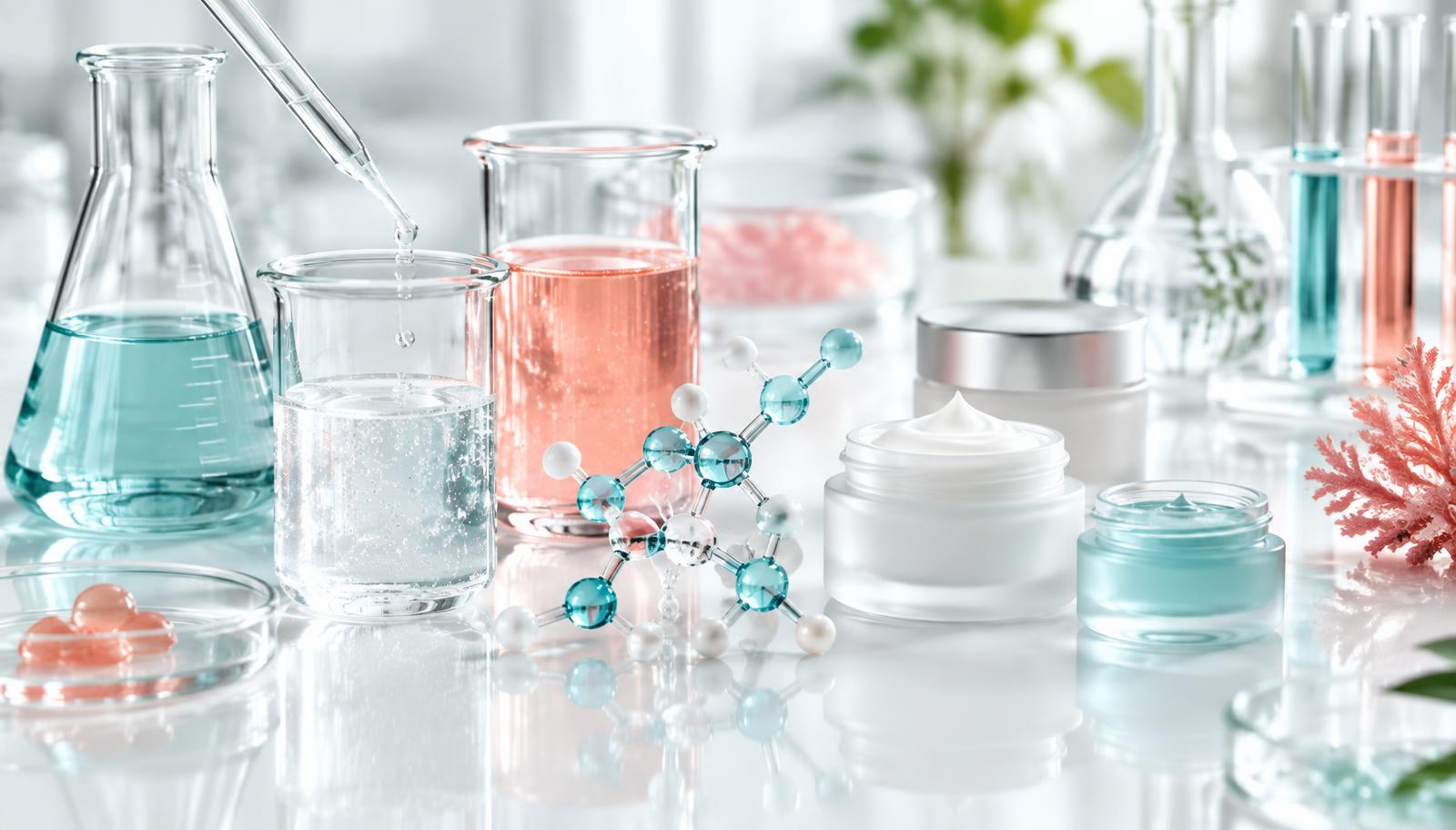
How Formulators Work With Peptides in Modern Cosmetics
A peptide is not a finished cosmetic. Between selecting a raw material and documenting a market-ready formula, formulators must consider molecular stability, the surrounding vehicle, microbial protection and packaging. The interesting science lies in how these decisions work together, rather than in any single ingredient promise.
Reading a Cosmetic Ingredient List (INCI)
The ingredient list tells you more than the front of the box — if you know where the 1% line sits.