

 SALE
SALE
- 3 ml
- Laboratory accessory
Synedica
In stockLaboratory Diluent Solution
- Product verification
- Tracked delivery
- Dedicated support
Overview
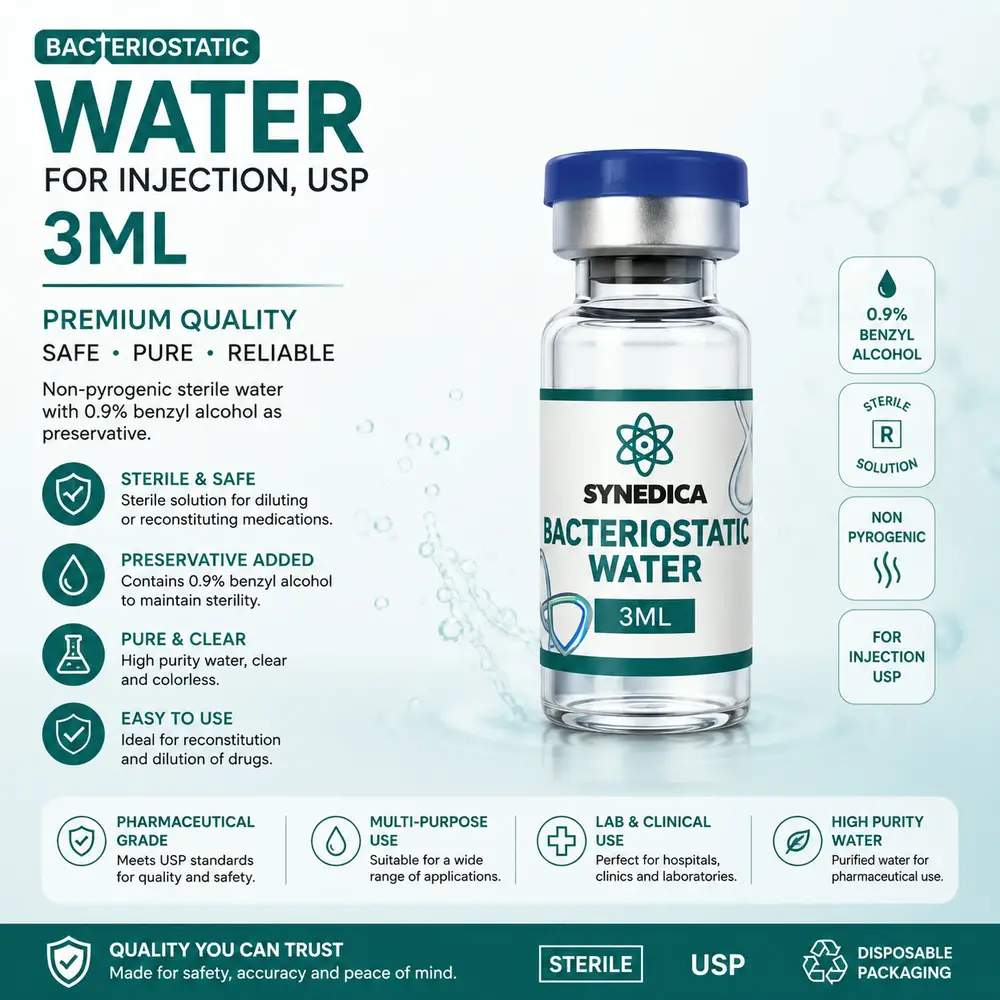
A sealed 3ml laboratory diluent supplied for professional preparation and analytical workflows. For laboratory use only. Not intended for human consumption or therapeutic use.
Supplies & essentials
USP bacteriostatic water for reconstitution
Sterile bacteriostatic water for injection, USP grade, with 0.9% benzyl alcohol as a preservative. It is the standard diluent used to reconstitute lyophilised research peptides, allowing multi-use storage of the prepared vial under refrigeration.
3 ml vial
Sealed sterile vial for precise reconstitution
USP grade
0.9% benzyl alcohol preservative
Multi-use
Preservative allows repeated sterile withdrawals
Room temperature
Store at 15–25 °C, protected from light
Product overview
This product is sold strictly for in-vitro research and analytical use. Not for human or veterinary consumption.
Authenticity
Verify your Synedica product
Use the code on a peptide kit, or open the dedicated pen validator, to confirm authenticity through the official Synedica systems.
Verify Authenticity
Enter the code from your Synedica box PEPTIDE KIT. It starts with SY followed by 5–6 digits.
Buying original means buying safety. Questions? Contact support
SSL Secure
Encrypted
UK Origin
Certified
Good Mfg
Practice
3-Layer Protection on Every Kit.
Every Synedica kit goes through a strict security process so you receive exactly what you ordered: sealed, verified and 100% authentic.
Scratch-off QR Code
Unique hidden code under a scratch-off layer. Scan to confirm your batch in our official system.
Holographic Seal
Tamper-evident holographic seal that guarantees your box arrived sealed and unopened from the UK.
NFC TAP BOX
Tap your phone on the box to open the official product page instantly — no typing required.
Verify Authenticity
Enter the code from your Synedica box.
It starts with SY followed by 5–6 digits.
Buying original means buying safety. Questions? Contact support
SSL Secure
Encrypted
UK Origin
Certified
Good Mfg
Practice
Browse collections
See all



Synedica Newsroom
All stories
Peptide ScienceSep 26, 2026
From Manual Synthesis to Digital Platforms: How Peptide Science Evolved
Peptide science advanced through successive changes in what researchers could build, measure and compare. From early synthetic chemistry to connected laboratory platforms, its history is one of expanding experimental possibilities—not a shortcut from a manufactured molecule to a clinically validated intervention.
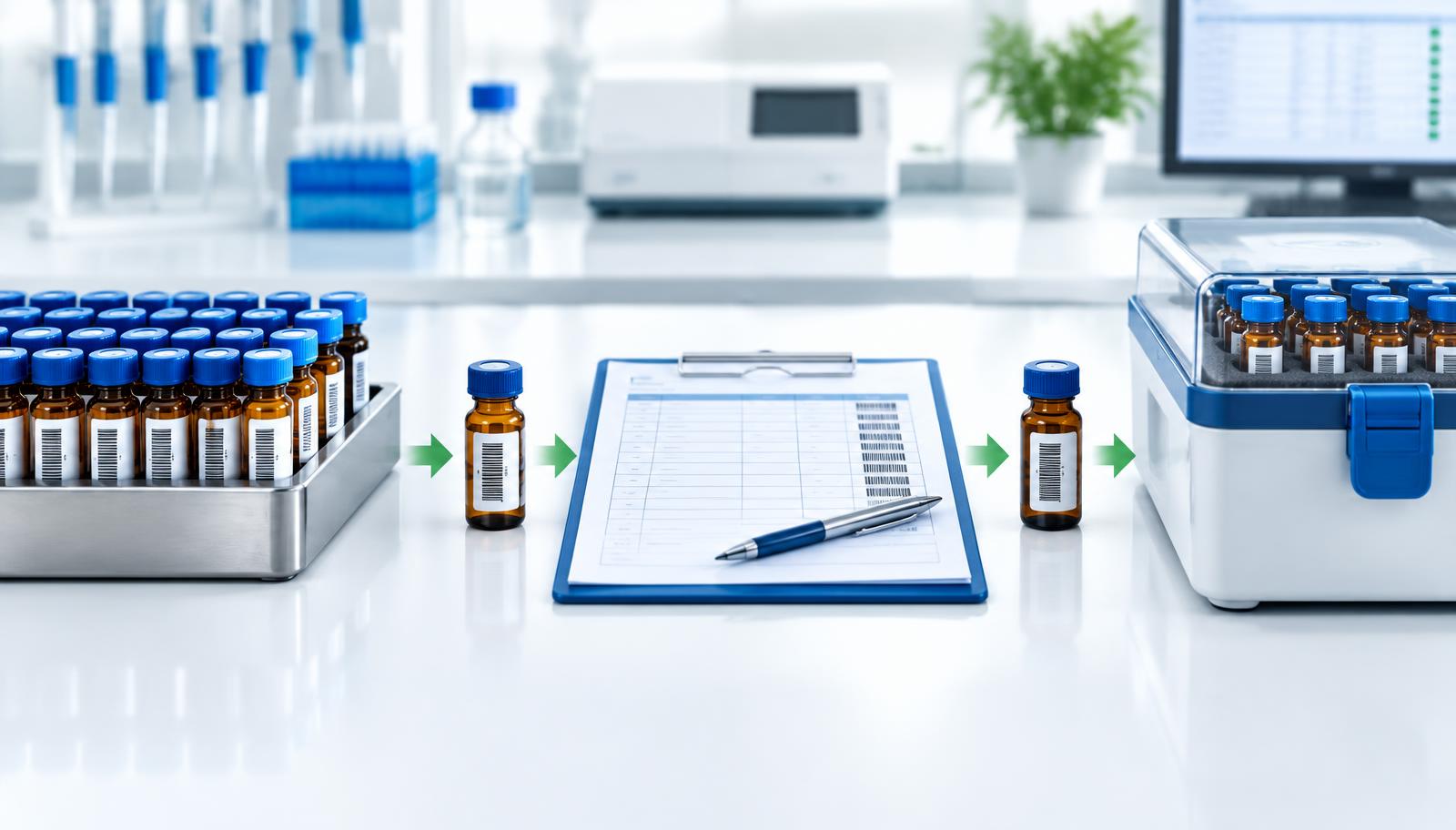
Buying & ComplianceSep 26, 2026
End-to-End Traceability: Building the Identity of a Research Batch
A research batch has more than a label. Its identity emerges from connected records that explain where material originated, how it moved and what happened to its samples. End-to-end traceability makes that history available for informed scientific review.
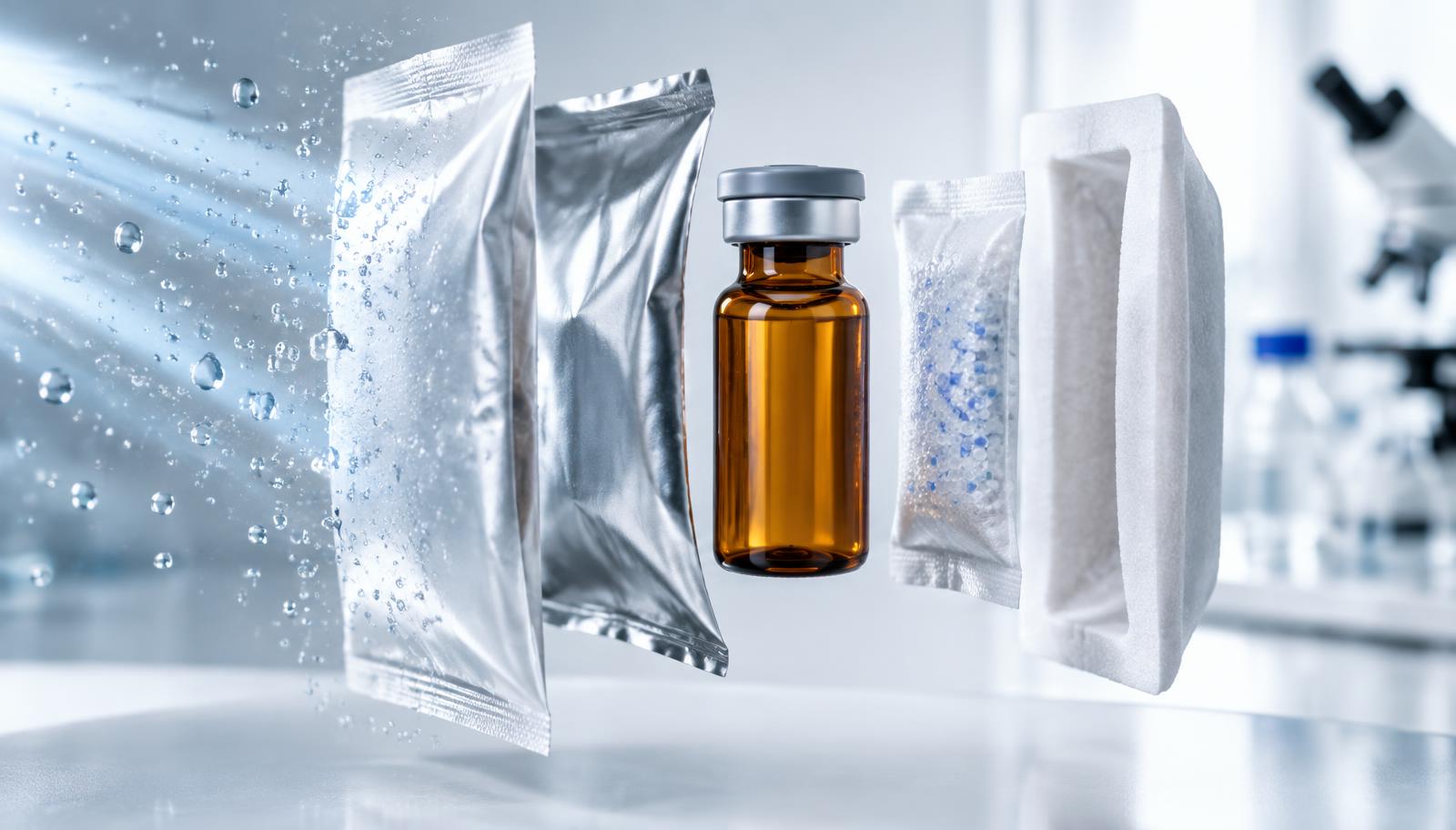
Handling & StorageSep 26, 2026
Peptide Packaging Science: Barriers Against Light, Moisture and Oxygen
For experimental peptide research, packaging is part of the stability question, not simply a protective shell. Glass, closures, headspace and outer layers work together, and their contribution becomes meaningful when the complete configuration is evaluated over time.
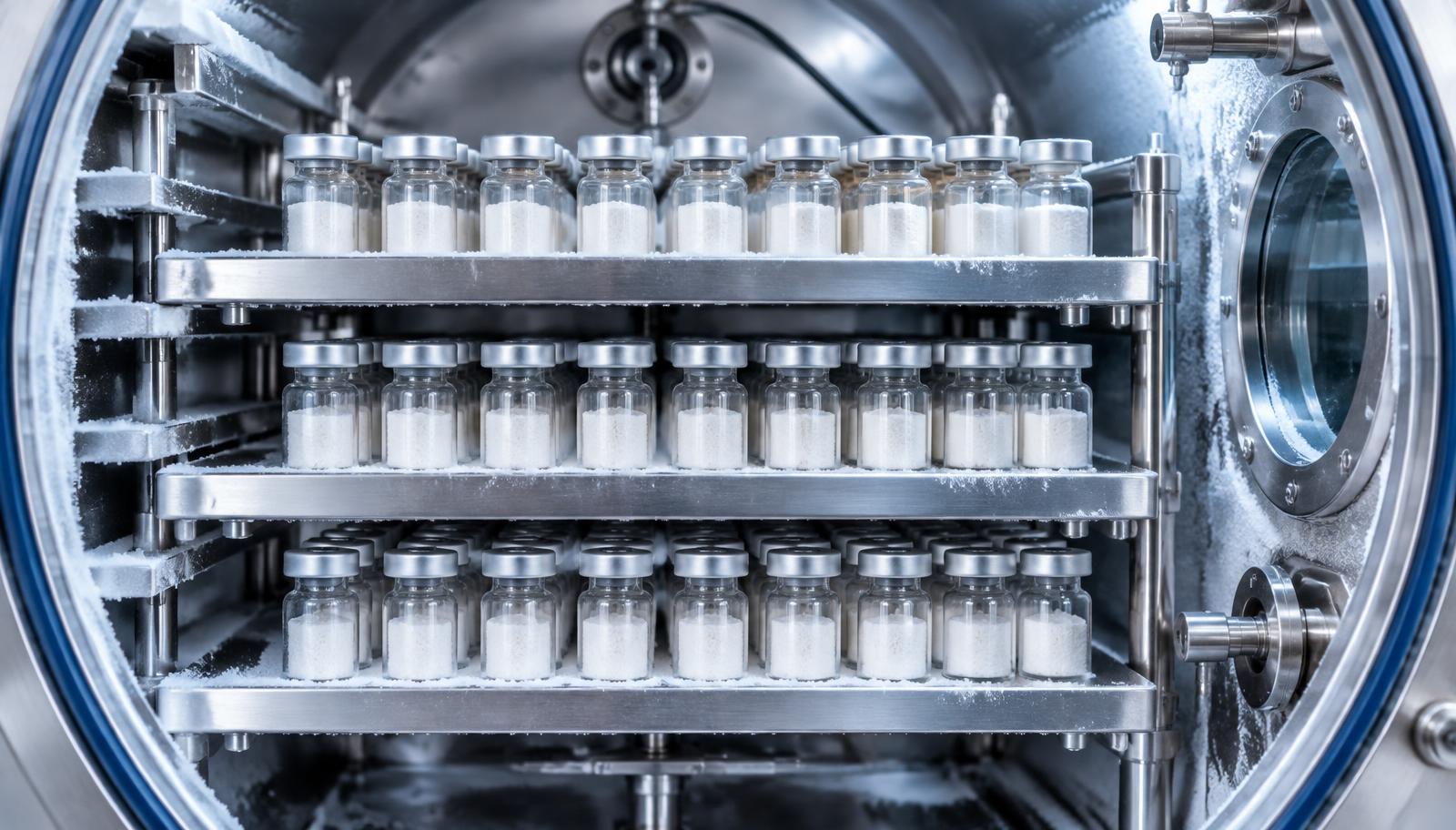
Handling & StorageSep 26, 2026
Inside Lyophilisation: How a Solution Becomes a Stable Dry Material
Lyophilisation is more than removing water. It transforms a frozen solution into a porous solid through controlled phase changes. Understanding the formulation matrix, drying stages and remaining moisture explains both the promise of this approach for research materials and the limits of what appearance alone can reveal.

Skin & BeautySep 26, 2026
How Formulators Work With Peptides in Modern Cosmetics
A peptide is not a finished cosmetic. Between selecting a raw material and documenting a market-ready formula, formulators must consider molecular stability, the surrounding vehicle, microbial protection and packaging. The interesting science lies in how these decisions work together, rather than in any single ingredient promise.

Skin & BeautySep 26, 2026
Signal, Carrier and Modulating Peptides: A Vocabulary for Cosmetic Formulation
Signal, carrier and modulating peptides offer a useful vocabulary for discussing cosmetic ingredients. These labels describe proposed roles, not guaranteed results. Understanding their boundaries helps formulators and informed readers connect molecular identity, experimental observations and finished-product evidence without confusing a plausible mechanism with a demonstrated cosmetic benefit.